Corsica, a mountain in the sea
Location, terroirs, climate and the winds of the island
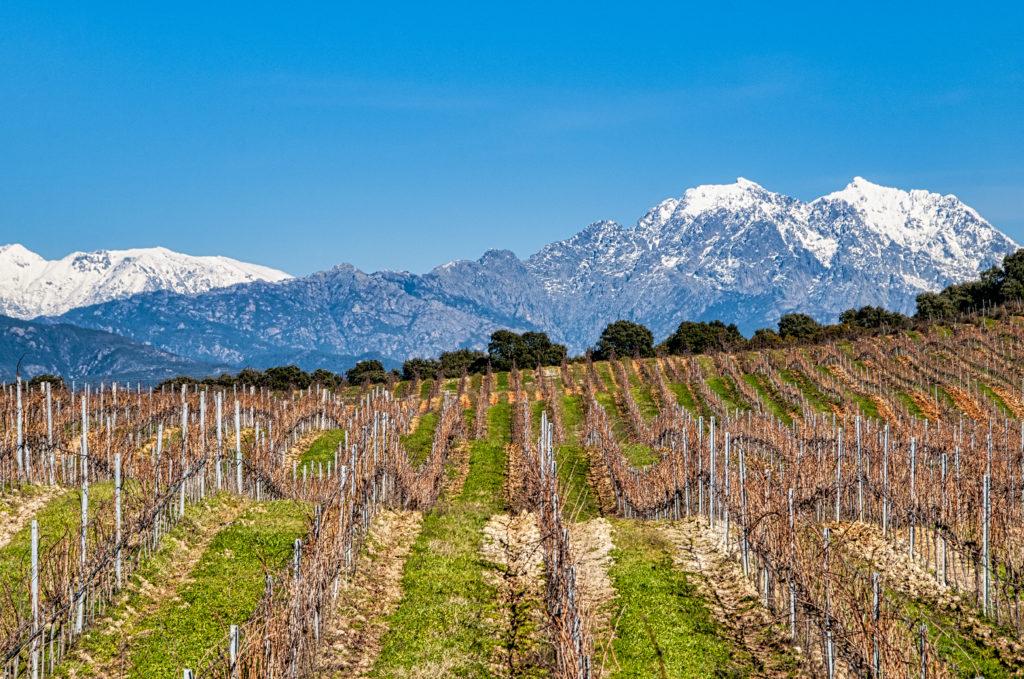
The Corsican vineyard is one of the few in the world where the vines stand at equal distance from the sea and the mountains. That is no detail: it explains almost everything about the island’s wines.
Location
Corsica is a mountainous island in the Mediterranean under French jurisdiction. It lies north of Sardinia and measures 180 km by 80 km. It is closer to Italy (83 km) than to the French coast (170 km).
Topography
With 21 peaks over 2,000 metres, 55% of the surface lies at an average altitude of 450 metres, broken up by valleys and hills. Their different aspects, the winds and the maritime influences turn it into a patchwork of microclimates and terroirs.
Geology and terroirs
Corsica is a kind of geological museum, where the granites of Hermitage and Beaujolais, the schists of Anjou and the limestones of Saumur and Burgundy sit side by side.
For such a small island that mosaic is exceptional. Four soil types stand out: granite in the west, schist in the north and on Cap Corse, limestone in Patrimonio, and a series of alluvial and marl soils from Bastia to Solenzara on the east coast.
Climate
Summers are hot and dry, winters mild. That mildness helps grape quality: frost is rare and springs are early and wet. The exceptional sunshine — at 2,885 hours a year Corsica holds the French record — does not rule out heavy rain: 10,590 m³ per hectare per year, against 8,910 m³ on the French mainland.
Add to that a mild summer that stretches ripening: in Corsica the ripening phase lasts 10 to 15 days longer than in continental regions such as Burgundy or Champagne.
A land of winds
The Mistral blows in from Provence. The Libecciu comes from Gibraltar and brings the rain. The Tramontane brings the cool of the Pyrenees, the Gregale a humid flow from the Apennines, and the Sirocco the heat of the Sahara.
These highly varied and lively winds regulate and cleanse. They make it possible to limit treatments and work more naturally. The winegrowers of Patrimonio agreed together to ban glyphosate, and around thirty of the 38 growers there work organically (Le Rouge et le Blanc, autumn 2019).